Milad Vafaeifard’s Inspiring Journey as a Sign Language Developer at EPAM
Milad Vafaeifard’s Inspiring Journey as a Sign Language Developer at EPAM
CATEGORY
Blog, Life at EPAM
Yuliya Stefniak
Communications Specialist
Alyse VanAcker
Lead Marketing Specialist
Yury Slobodsky
Lead Marketing Designer
DATE
Jul 29, 2025
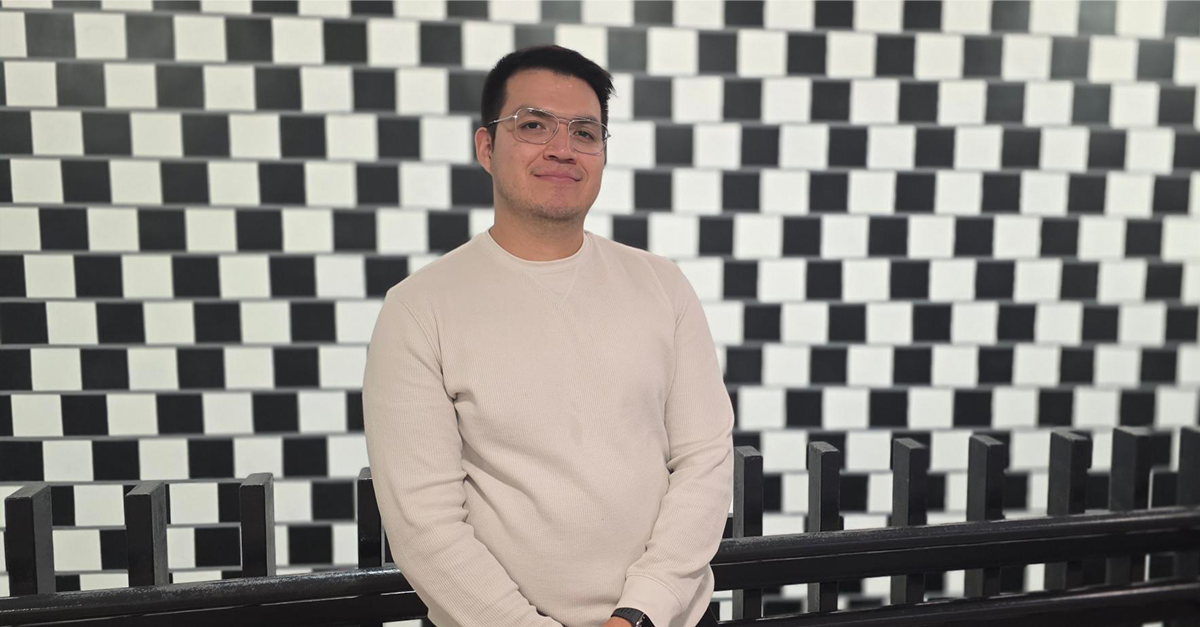
Milad Vafaeifard, a Lead Software Engineer at EPAM, has a unique perspective as a deaf person succeeding in the high-tech industry. Through his everyday work, advocacy and teaching programming in sign language, Milad is actively breaking barriers for the Deaf and Hard-of-Hearing community. Milad’s story reminds us that inclusivity isn’t just about creating opportunities — it’s also about shaping environments where everyone, regardless of ability, can thrive. By embedding accessibility into policy, technology and education, Milad envisions a future where innovation serves everyone equally. His voice might be silent, but his impact speaks volumes.
Overcoming Silence: Milad’s Childhood
Born healthy, despite a high fever his mother had during pregnancy, Milad was diagnosed as deaf at the age of two. His parents, determined to turn their initial despair into positive action, sought out top specialists to support his development. Thanks to their dedication, Milad was socialized early and learned sign language.
But during his teenage years, he felt isolated. “I felt like an alien in a world where I couldn’t scream because I am deaf,” Milad recalls, highlighting his loneliness and the challenge of finding friends who used sign language. Over time, he found strength in the Deaf community, which gave him a true sense of belonging and pride.
Milad began his higher education at the Budapest University of Technology and Economics. Due to his hearing impairment, he faced numerous obstacles, especially during lectures where he had to rely on written notes and intense self-study to fill in the gaps.
A major turning point came when he was offered a sign language interpreter. “However, my new assistant struggled with the high-tech course content, which made accurate translation difficult. So, I decided to keep going on my own, just as before — working even harder. Many nights, I studied for hours and barely slept to stay on track,” he shares.
Through these experiences, Milad discovered his resilience and an incredible ability to focus, reframing his deafness not as a limitation but as a unique strength that shaped both his academic journey and personal growth.
Milad’s story doesn’t stop at personal success — it’s a call to action. Accessibility must be intentional, adaptable and deeply embedded in how we design systems and experiences. His journey challenges us to redefine inclusion, envisioning a world where accessibility is woven into the fabric of innovation.
Professional Growth and Passion for Technology
Milad’s tech journey began back in the 1990s with Microsoft DOS. His curiosity was sparked by learning commands to install and play games. That early fascination soon grew into a lifelong passion for technology. Alongside tech, he also enjoyed creative pursuits like drawing; the movie Toy Story inspired him to try out 3D modeling and animation. These days, he loves rewatching the movie with his wife and daughter.
Over time, his programming skills evolved — from writing in C/C++ to building a career in web development, guided by shifts in the job market and support from mentors who introduced him to newer frameworks like Angular.
A Pathway to Teaching
“During the pandemic, I realized there was almost no programming content available in sign language — especially with the technical depth needed for deaf learners. So, I launched my own YouTube channel,” he explains.
Currently, Milad has nearly 1,000 subscribers. His most popular video, “Who Am I? A Deaf Programmer,” has close to 2,000 views. In it, he shares his journey and how he found his place in the IT world.
Milad selects video topics based on trends, accessibility themes and personal experiences — always with a goal to inspire and educate. “The biggest challenge is making content in sign language accessible to both deaf and hearing viewers. I try to add subtitles, though it takes a lot of extra effort,” he admits. Even without subtitles or voiceovers, his expressive delivery and clear signing helps keep viewers engaged.
He hopes the channel helps bridge a major gap — making tech more inclusive and accessible for the Deaf community.
Career at EPAM and Advocacy
Milad joined EPAM in 2016 after being contacted for an angular developer position. “I was impressed by how inclusive and thoughtful the hiring process was. They arranged an interpreter for the interviews, which made a big difference,” he recalls.
This experience inspired him to advocate for similar inclusive practices in other companies. It’s a reminder that true inclusion starts with how we welcome people into the workplace.
Looking ahead, Milad envisions a future where accessibility is built into every stage of tech development. “I’m especially excited about how AI and AR can help improve communication in the Deaf community,” he says. But he also stresses that these tools must be built with the Deaf community, not just for them — ensuring they align with real needs and respect Deaf culture.
Future Plans
Milad plans to keep growing as a developer and deepening his knowledge in AI. But just as importantly, he wants to continue advocating through his channel and other outreach.
“I’ve found my purpose in making programming accessible to deaf people. Now I want to reach more of the global Deaf and Hard-of-Hearing community and connect them with the tools and resources they need,” he says.
His advice? “Start your journey. Stay curious. Take on challenges. Find a mentor. Together, we can build a bridge between the deaf and hearing worlds — and create a future where inclusive innovation is the norm, not the exception. Let’s make sure everyone’s voice is heard — one line of code, one connection, one conversation at a time,” concludes Milad.
If you’re interested in joining the team at EPAM, please view open roles at www.EPAM.com/careers.